
We cut back to solid pavement
Feathered edges and soft, cracked asphalt around a pothole will keep breaking. Square cuts and clean edges create a stable boundary for the patch.
Serving New Orleans, Louisiana & surrounding areas
Parking Lot Repair in Minneapolis
Fix potholes, cracking, and failed patches before they spread. Get a clear plan for restoring your asphalt surface, protecting the base, and getting your lot back to safe, clean traffic flow.
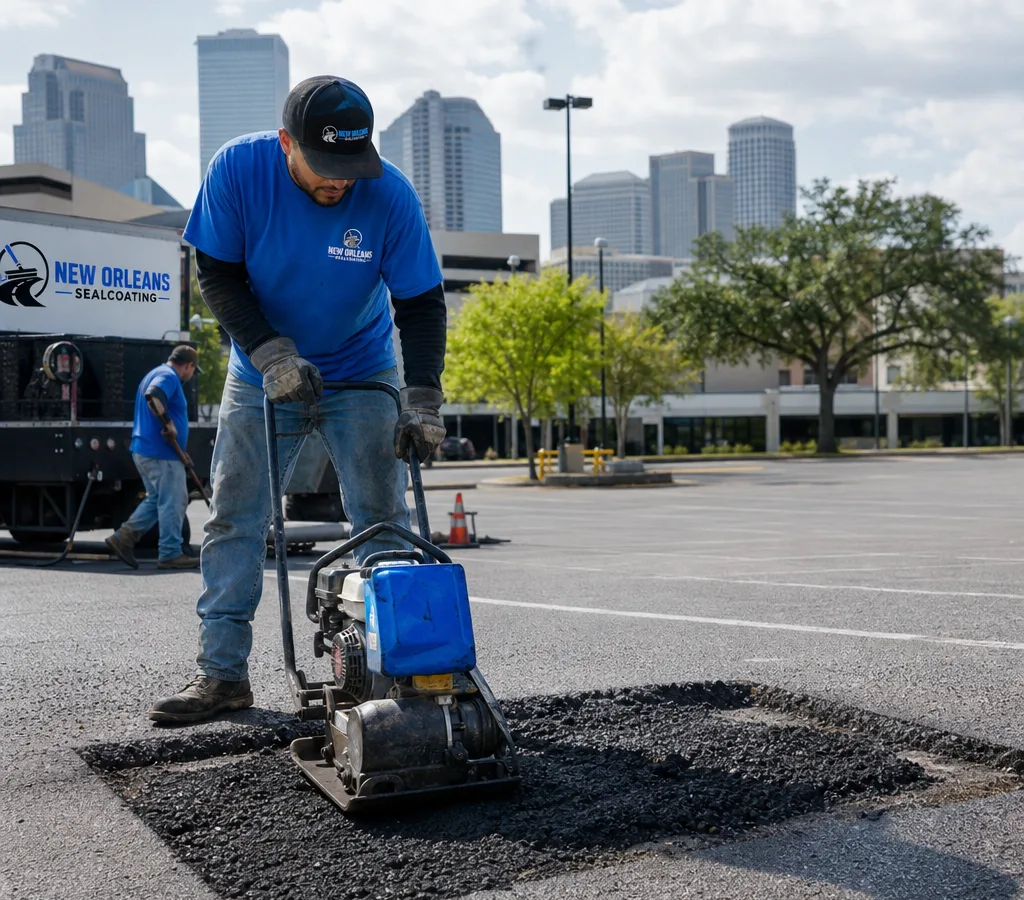
Repair Damage Before It Spreads
When customers and tenants judge a property, the parking lot is usually their first impression. If your asphalt has potholes, open cracks, raveling edges, or older patches that keep failing, it is time for targeted parking lot repair Minneapolis property owners can schedule with confidence.
We repair worn blacktop surfaces for retail, industrial, multifamily, and small commercial properties. The goal is straightforward: remove failed material, repair the problem area down to sound asphalt—and the base if needed—then rebuild the surface so it can handle traffic and water without breaking apart again.
Minneapolis has a tough mix for pavement: long winters, repeated freeze-thaw cycles, and de-icing salts. Water gets into cracks, freezes, expands, and turns small problems into potholes and broken edges. Good pavement maintenance in Minneapolis is less about cosmetics and more about keeping water out and keeping loads supported.
New Orleans Sealcoating is based at 1440 N Dorgenois St, Suite 4, New Orleans, LA 70119. If you manage property in Minneapolis and need asphalt repair, tell us what you are seeing and what traffic you have. We will recommend a repair approach that fits the pavement condition, timing, and budget.
Match the Repair to the Failure
Most parking lot repair and pavement repair in Minneapolis falls into a few practical categories. The right choice depends on whether the issue is only in the asphalt surface or if the base below has failed.
What parking lot repair does not fix: widespread alligator cracking across large areas usually points to base failure or end-of-life pavement. We may recommend a broader maintenance plan that blends patching now with a staged overlay or replacement later.
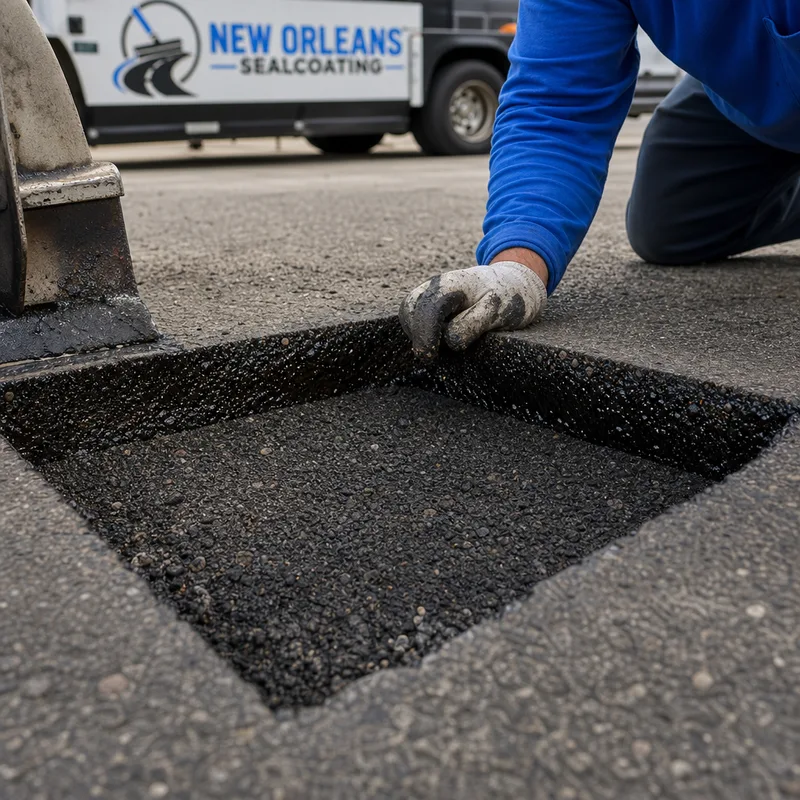
Built to Hold Under Traffic
Feathered edges and soft, cracked asphalt around a pothole will keep breaking. Square cuts and clean edges create a stable boundary for the patch.
If water has pumped fines out of the base, the asphalt on top cannot stay intact. When needed, we excavate, rebuild, and compact before paving.
Tack coat on contact surfaces helps the patch bind to the existing pavement, reducing edge separation where water likes to enter.
A patch that is not compacted to the right density will ravel and sink. We compact in lifts and match the surrounding grade for drainage.
Good asphalt repair supports striping, accessibility compliance, and long-term upkeep. We aim for repairs that keep the lot serviceable, not temporary band-aids.
From Evaluation to Reopening
We look at distress type, traffic patterns, and drainage. If water is standing anywhere, that becomes part of the plan because it accelerates failure.
We recommend the least disruptive repair that will hold: spot patching, full-depth patching, edge rebuilds, or crack-focused maintenance when the structure is sound.
We remove loose asphalt and cut clean edges. If base material is saturated or unstable, we excavate to firm material and rebuild in compacted lifts.
We place asphalt in proper lifts and compact it to match the surrounding surface, paying attention to seams so plows and tires do not catch edges.
You get a clear summary of what was repaired and what to watch next season. If sealing is appropriate, we coordinate timing so repairs are not immediately stressed.
Estimate Factors
Parking lot repair in Minneapolis typically ranges from about $750 to $4,500 for common patching and pothole work, while larger, multi-area repairs or full-depth patching can run $5,000 to $20,000+ depending on quantity and severity. Small isolated pothole repairs usually land in the lower end; widespread failures across drive lanes push pricing up.
Final cost depends on square footage, patch depth, saw-cut and removal needs, base repair, access, traffic control, and whether hot mix placement is seasonal. Exact pricing is confirmed after an on-site evaluation of the damaged areas.
If your lot has recurring potholes or patches that keep breaking apart, get a written scope that addresses the cause—surface failure or base failure—so you are not paying to fix the same area twice.
Book Your Free InspectionMatch the Work to the Property
Many of the materials and methods overlap, but driveway repair in Minneapolis often has different constraints than a commercial lot. Residential driveways typically have lighter loads but more tight turning and edge stress near garages, aprons, and sidewalk transitions. Parking lots see heavier turning loads, delivery traffic, and concentrated stress at entries, dumpsters, and loading areas.
If you are comparing blacktop repair options for a small business driveway or private lane, we can help you choose between patching, crack work, and a maintenance plan that fits how the surface is actually used. Broader protective maintenance can often follow once repairs are complete and the asphalt has had time to cure.
Field Results
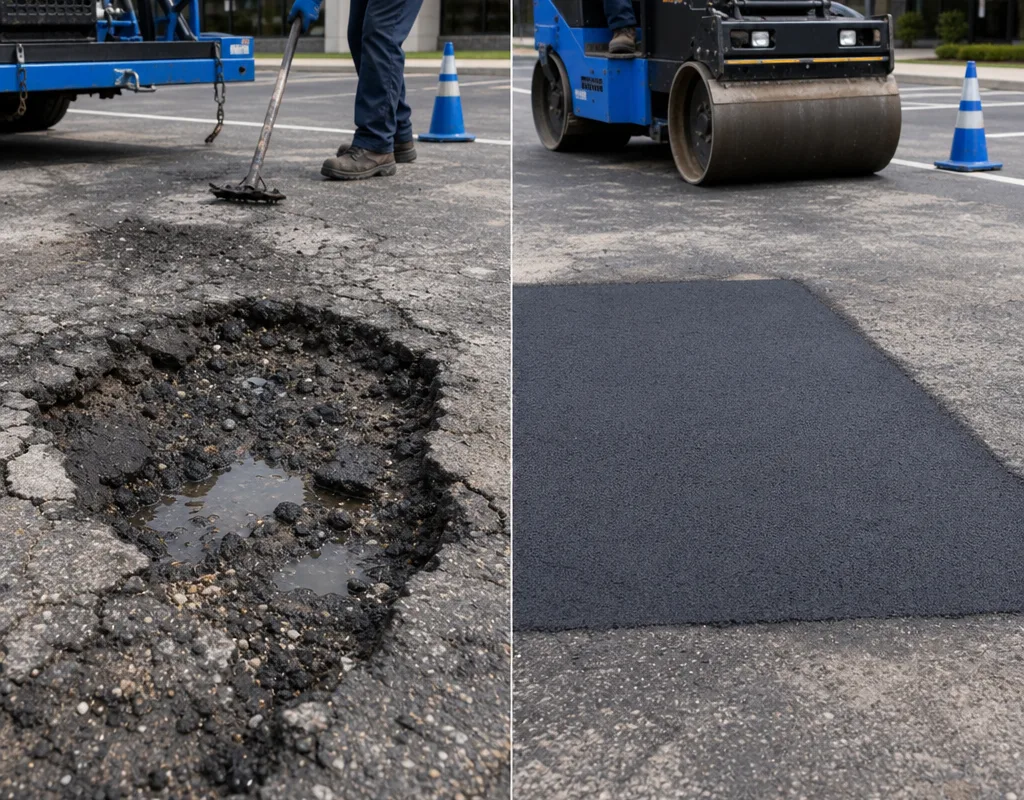
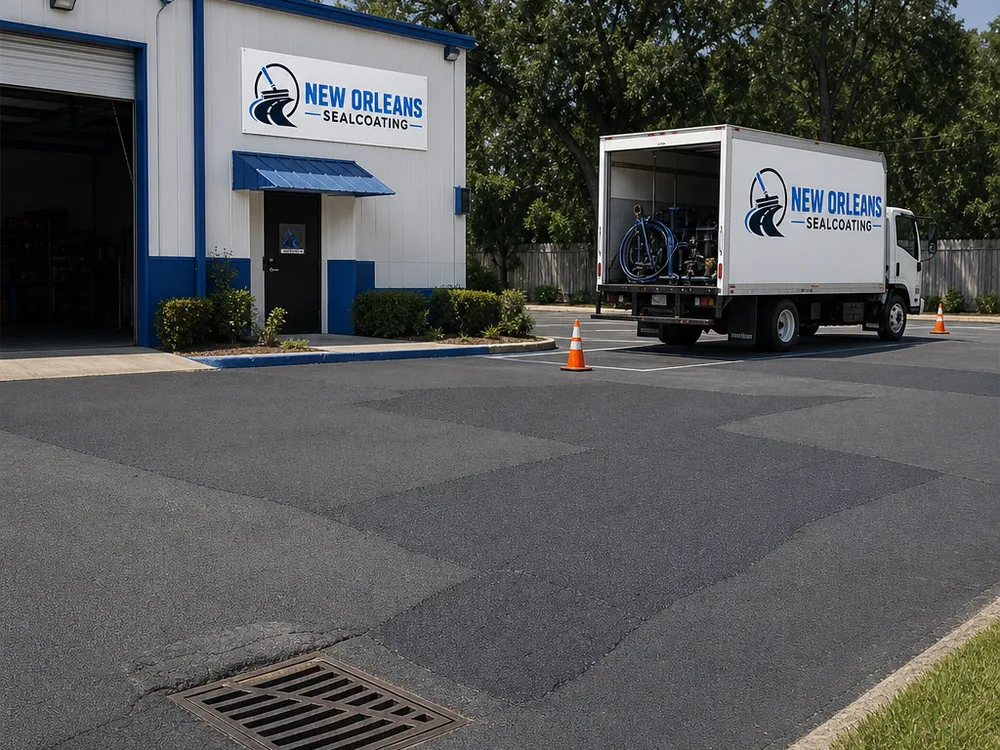
Practical Answers
Temporary pothole repairs are sometimes possible in cold conditions, but long-lasting repairs generally require better weather for proper bonding and compaction. In Minneapolis, many permanent hot mix asphalt repairs are scheduled when plants are operating and temperatures support good compaction. If you need a safety fix now, we can discuss a short-term patch strategy and plan a permanent repair window.
Full-depth patching removes asphalt down to the base and rebuilds the area, while a surface patch only replaces the top layer. If the base is unstable, wet, or pumping material, a surface patch will fail quickly. For recurring potholes and alligator cracking, full-depth patching is often the correct asphalt repair approach.
If the pavement is mostly intact with cracking and minor wear, maintenance like crack sealing and protective treatments may be enough. Potholes, broken edges, sunken areas, or repeated patch failures indicate repair territory. A site walk usually makes the difference clear because base failure shows up as movement, depressions, and connected cracking.
A new patch will usually look darker than older blacktop at first, then blend as it weathers. The more important match is thickness, compaction, and grade so water drains correctly and plows do not catch edges. When aesthetics matter, we can discuss a repair layout that looks intentional instead of scattered.
Usually not. Most asphalt patching can be phased so part of the lot stays open, especially for retail or multifamily properties. The best approach depends on where repairs are located, how many access points you have, and whether delivery traffic needs a dedicated lane.
Many hot mix asphalt repairs can handle traffic the same day once they cool and are properly compacted, but timing depends on weather, patch thickness, and traffic type. We will tell you what to expect for your specific repair areas so you can plan tenant notices or traffic control.
Plan the Repair With Confidence
Describe the problem areas and the type of traffic your lot sees. We will recommend the right repair method, provide a written scope, and schedule work to reduce disruption.